
Accepta is a manufacturer and supplier of a comprehensive range of speciality water treatment chemicals, dosage and control equipment, test kits and laboratory services.
Our products are used to protect people and assets, save money and maintain the operational efficiency of all kinds of water systems including steam boilers, cooling water systems, closed circuit and HVAC systems, drinking and process water, reverse osmosis and wastewater and effluent systems.
Service Company Looking for Own Label Provider or Reseller?
Looking to Distribute Accepta products in your market?
The main component of most water treatment regimes is the use of chemicals to alter the system make-up water in order to inhibit certain behaviours, supplement the water chemistry or simply protect the system & public from unabated bacterial growth.
You can find more information on different chemical applications and treatment chemistries across our website, some chemicals products are even available to order online
Bringing together decades of experience through research and development between our engineering workshop, laboratories and industry leading technical team; we can share innovative products and services built to solve problems and improve efficiency and control.
Watch our videos on Activ-Ox Chlorine Dioxide and Bromgard – Complete Cooling Water Treatment, to see some of what we can do for you.
Please complete this form and we will be in touch
Accepta - The Water Treatment Products Company work with industry worldwide delivering practical, cost-effective solutions to resolve complex problems. If you require technical assistance or information about our water treatment chemicals and other speciality products, please contact our dedicated technical support team on:
+44 (0) 161 877 2334 or complete our Technical Support form.
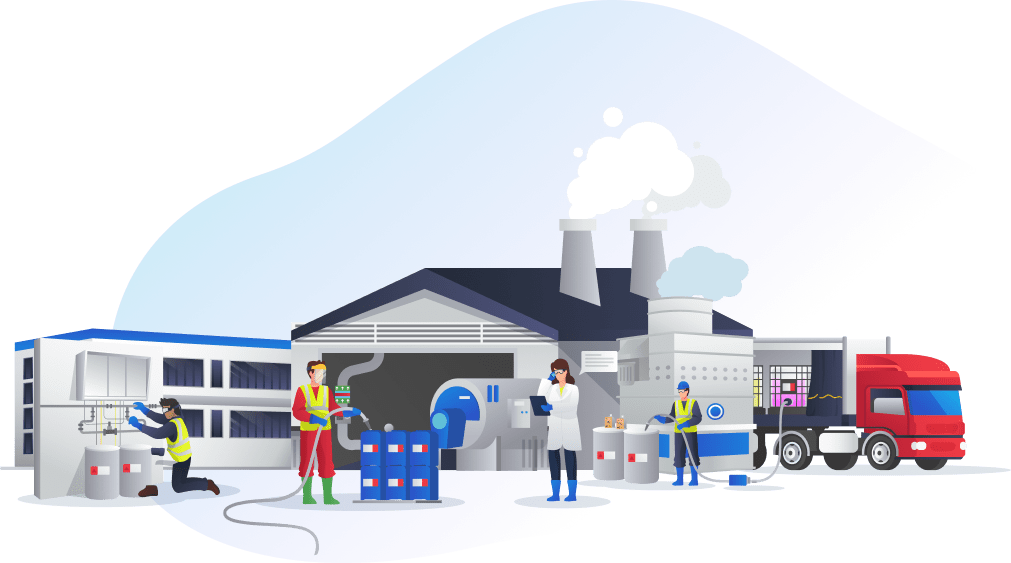
Accepta offers custom chemical manufacturing, specialist toll blending and white label production services for our own water treatment chemicals and client specific formulations to British and international customers. To discover how you could benefit from our environmentally sensitive, quality driven chemical manufacturing capabilities please call us on:
+44 (0) 161 877 2334 or contact us.
Develop your skills with our industry-leading online training courses including Legionella & Asbestos awareness as well as COSHH and Manual Handling Courses. Accepta is managed by world leading industry experts who have designed training for engineers, facilities managers and environmental professionals. Keep up to date with our extensive library of good practice guides, latest research, regulatory updates, news and more... knowledge base.
Accepta was established to provide high quality products that water treatment specialists can use to provide an equally high quality service to their own customer base. We are always looking to add to our growing number of locally based distributors working within the water treatment and related service sectors around the world. If you are interested in becoming an international distributor of Accepta - The Water Treatment Products Company please click here to learn more.


